
Warehouse Cooling
Warehouse HVAC in Al Hafnah
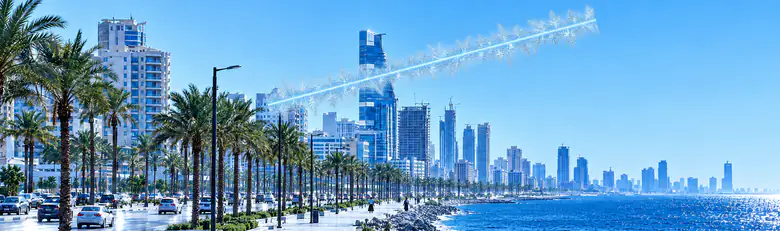
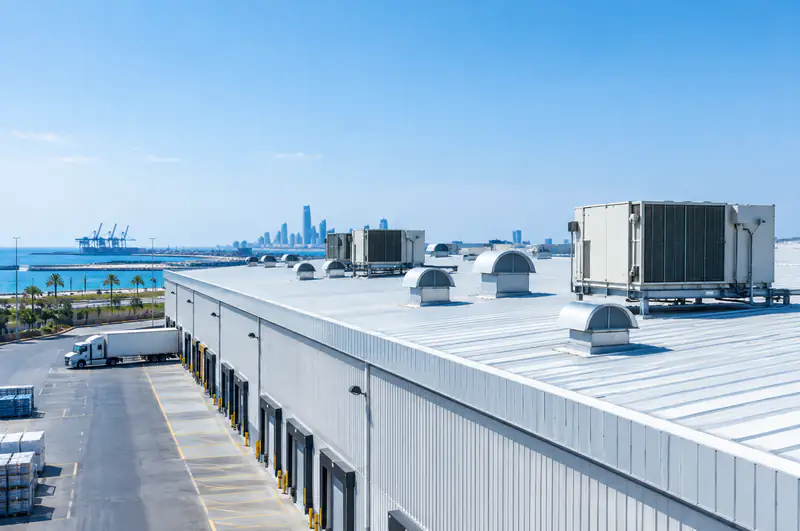
In Al Hafnah, east Jeddah, warehouses and factories with metal roofs face intense heat from their eastern location. Alrabih designs strong, reliable cooling systems that maintain safe, consistent temperatures to protect stock and workers.
- Zone control
- Stock protection
- Directed ventilation
Clients We're Proud to Serve
Organisations and companies that trusted Alrabih with their projects.































When your warehouse needs a proper HVAC system
- 1
Heat that damages stored stock
Food, pharmaceutical and electronics stock all have storage temperature limits. When a metal warehouse roof bakes under Jeddah's sun, the air inside becomes a direct threat to shelf life and product quality. The solution starts with a survey of the racking layout to find the critical zones.
- 2
Workers overheating in the picking area
Workers in the picking and loading area move constantly under a hot roof. Natural ventilation alone is not enough in summer. We choose between direct cooling and evaporative cooling based on a site survey and the indoor humidity level.
- 3
Warehouse offices that are never comfortable
Supervisor and reception offices have different needs from the large storage hall. Putting them on one system raises cost and weakens performance in both areas. We give the office zone its own system and link it to the warehouse with pressure-control points.
Who it's for
Storing heat-sensitive stock in a warehouse
We locate the critical zone in the racking layout and design an independent cooling system with its own controls, keeping that area at a safe temperature separate from the rest of the warehouse.
Ask on WhatsAppBuilding a new warehouse and need HVAC from the start
We join the project at design stage before the roof closes, mapping cooling zones, ventilation and duct routes to fit the racking plan and loading doors from the outset.
Ask on WhatsApp
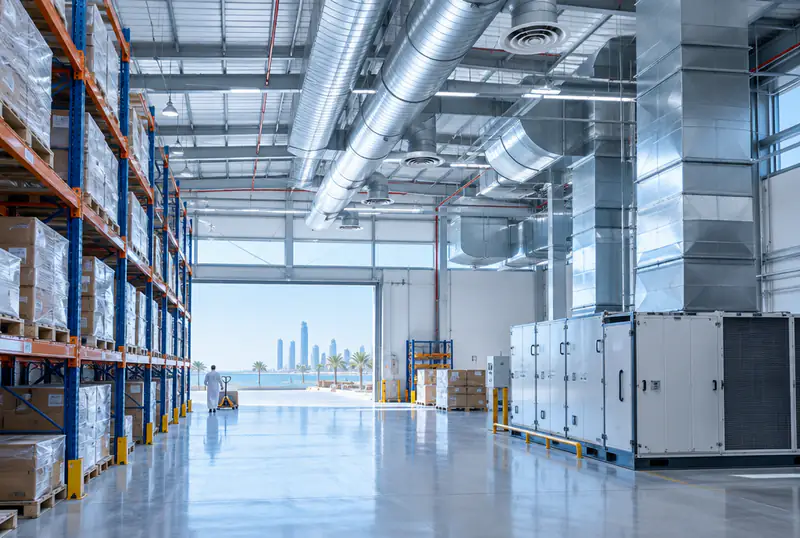
What the system covers
- Racking layout and zone map
- Cooling units per zone
- Ductwork from our workshop
- Independent controls per zone
- Airflow check after start-up
How we work
How we work
- 1
Site survey
We visit the warehouse, measure the internal height, review the racking layout and the positions of loading doors and offices, then map the main thermal zones before proposing any system.
- 2
System design and zoning
We design a system for each zone: central or split units for offices and critical stock areas, and evaporative or mechanical ventilation for the picking area where indoor humidity allows it.
- 3
Duct fabrication and installation
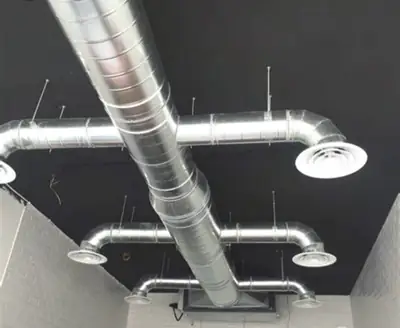
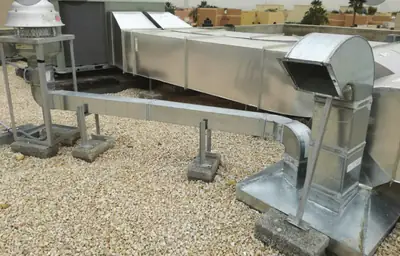
We fabricate round and rectangular ductwork in our workshop from G90 galvanised sheet to the site dimensions, insulate with Armaflex or Kimmco materials, then mount the units, run the copper and connect the control points.
- 4
Start-up and handover
We start each zone separately, measure airflow at multiple points across the warehouse floor, and check that all drain lines are clear before handing over.
A zoned system or unplanned scattered units?
| Alrabih | The usual way | |
|---|---|---|
| Zone design | Surveyed and mapped before fitting | Units added when complaints come |
| Ductwork | Fabricated to site dimensions | Flex duct without calculation |
| Evaporative cooling | Where humidity allows it | Fitted without measuring humidity |
| Sensitive stock | Separate zone with its own control | Left in the general air |
| Copper runs | Mueller, weld-free to 30 m | Multiple welded joints |
Everything your AC needs, from one team
From system design and duct fabrication to installation, commissioning and maintenance.

Split AC installation
Request this serviceDuct installation
Request this serviceCentral AC installation
Request this serviceDuct fabrication
Request this serviceCold room installation
Request this serviceElectro-mechanical works
Request this serviceChiller & AHU installation
Request this serviceHVAC design
Request this serviceAC repair & faults
Request this serviceAC cleaning
Request this serviceRefrigerant charging
Request this serviceCentral AC maintenance
Request this serviceChiller maintenance
Request this serviceAC removal & refitting
Request this serviceDuct cleaning & sanitising
Request this serviceAC servicing by brand
Request this serviceOperation & maintenance contracts
Request this serviceAHU maintenance
Request this serviceFridge & freezer service
Request this serviceCold rooms
Request this serviceDisplay fridges & chillers
Request this serviceFactory HVAC
Request this serviceWarehouse HVAC
Request this serviceVilla & home HVAC
Request this serviceHotel HVAC
Request this serviceSchool HVAC
Request this serviceHospital HVAC
Request this serviceMosque HVAC
Request this serviceMall & retail HVAC
Request this serviceRestaurant & cafe HVAC
Request this service
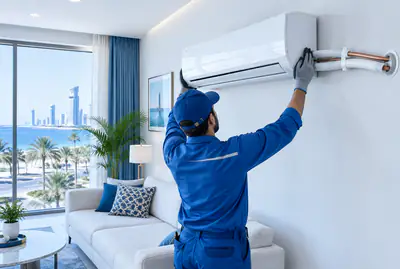
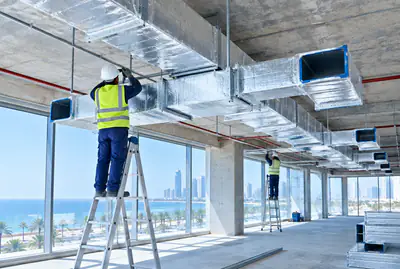
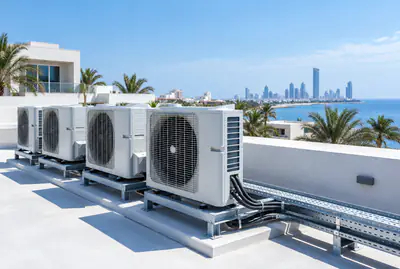
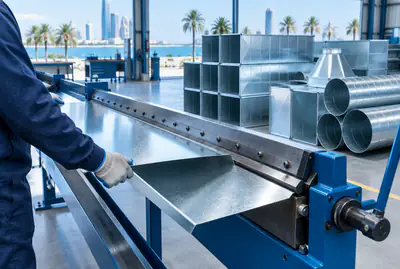
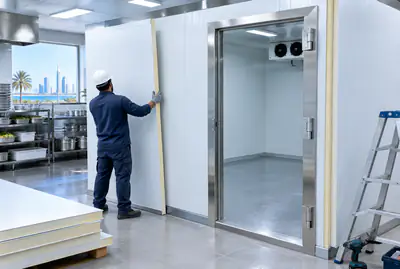
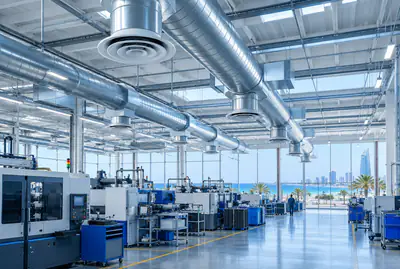
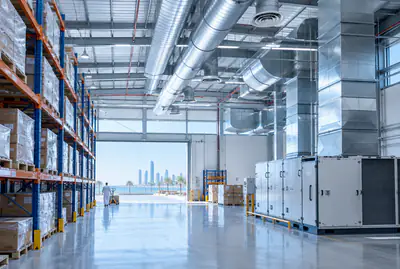
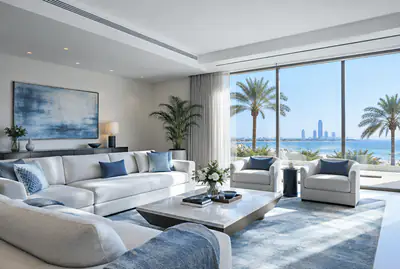
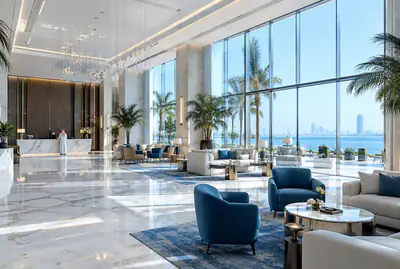


Some of our work
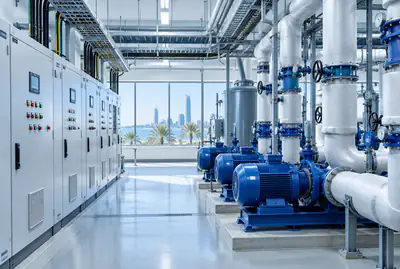
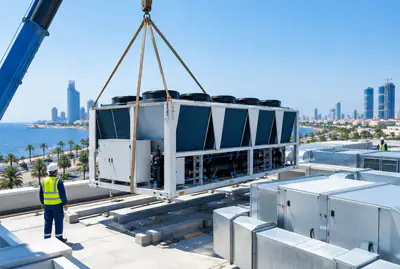
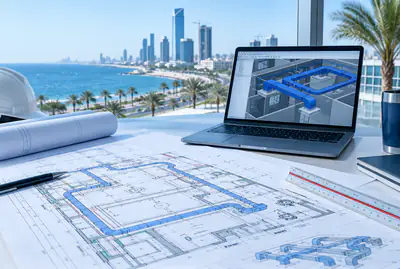
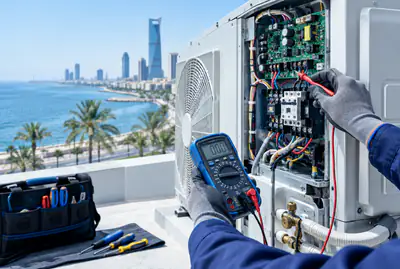
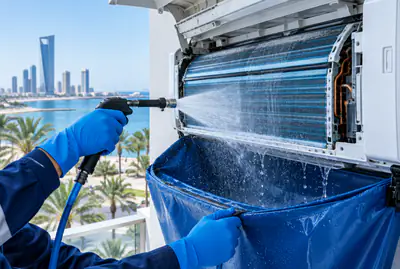
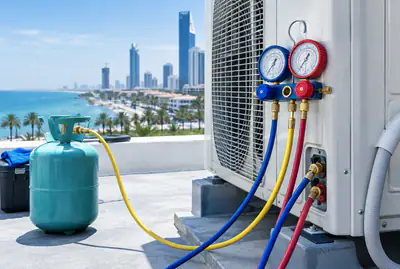
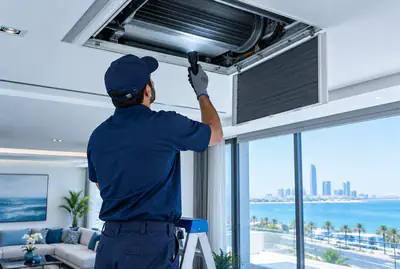
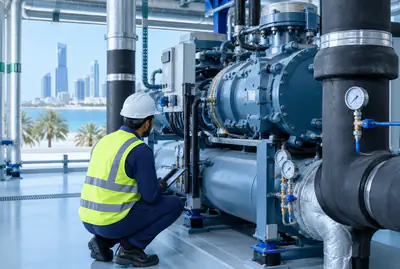
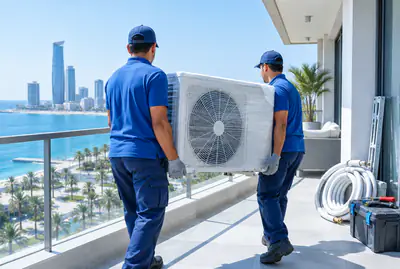
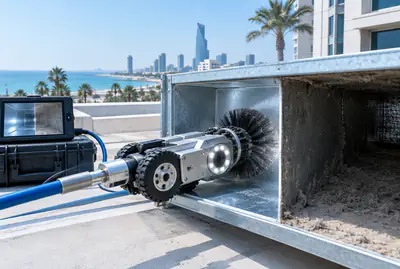
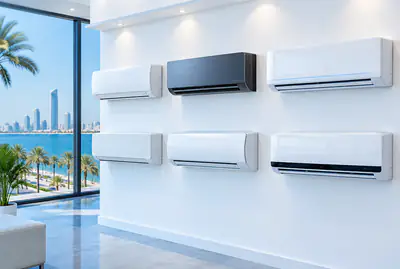
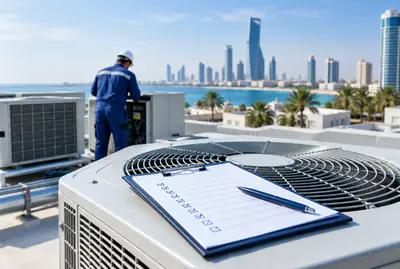
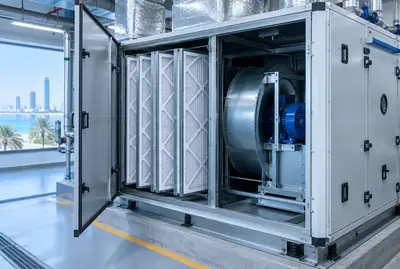
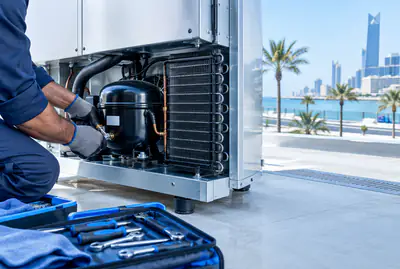
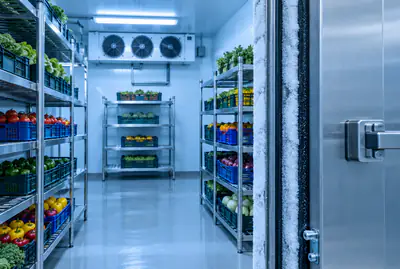
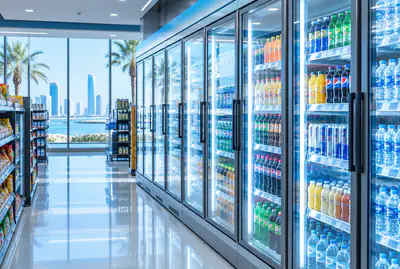
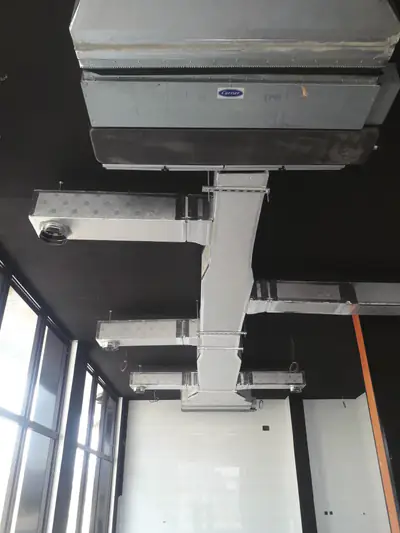
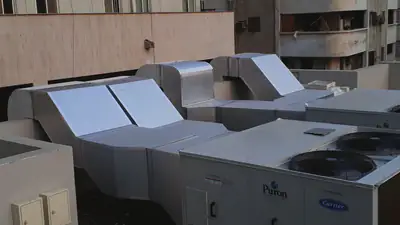
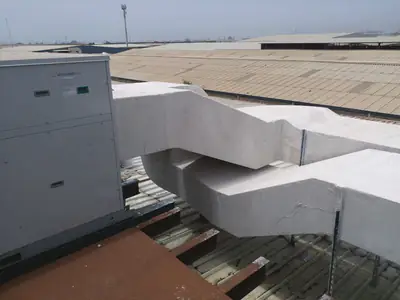
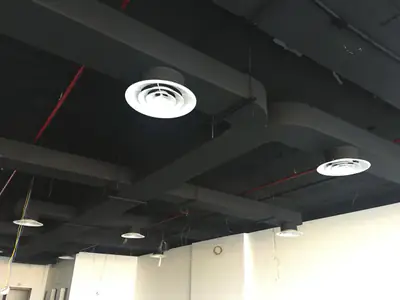
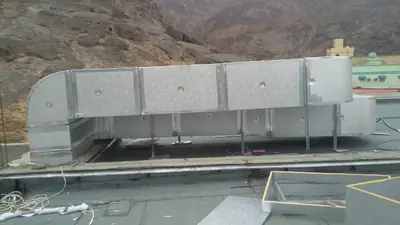
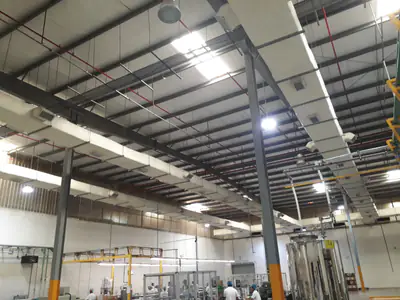
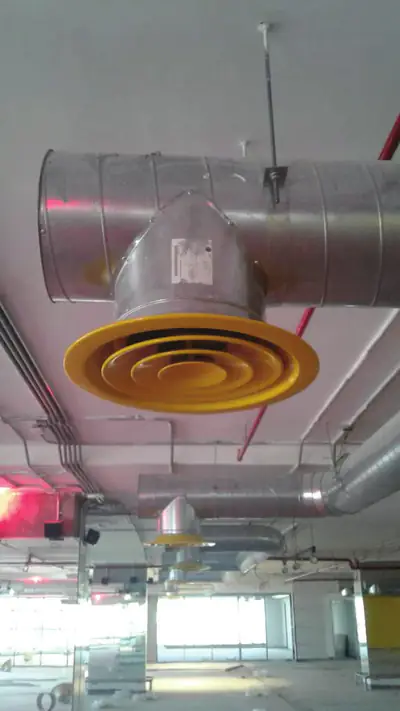
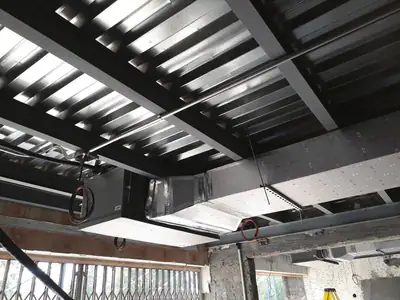
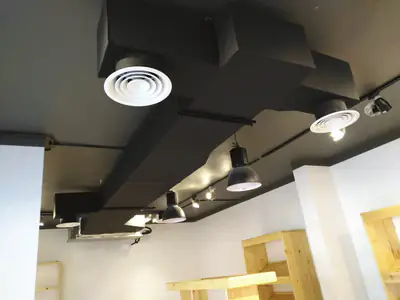
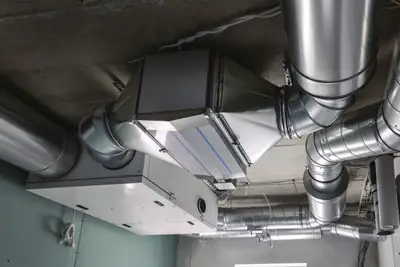
Ductwork, rooftop units and diffusers, from work we've completed in Jeddah.
Customer reviews
What our customers say
- Muhammadramzan 2641
“MashaaAllah. Services are so good. Behaviour and kindness 100/100. Prices are less then Market. Fully recommended”
- shahzeb armani
“Wow. Prices are so comfortable. Outstanding services. People are so talented and nice”
- Tawfik AlyawerLocal Guide
“U can find all u need for air conditioning”
Your satisfaction matters to us! If you had a great experience with us, we'd love a 5-star rating and a kind review.
Worked with us? Leave a reviewService areas
We come to you anywhere in Jeddah
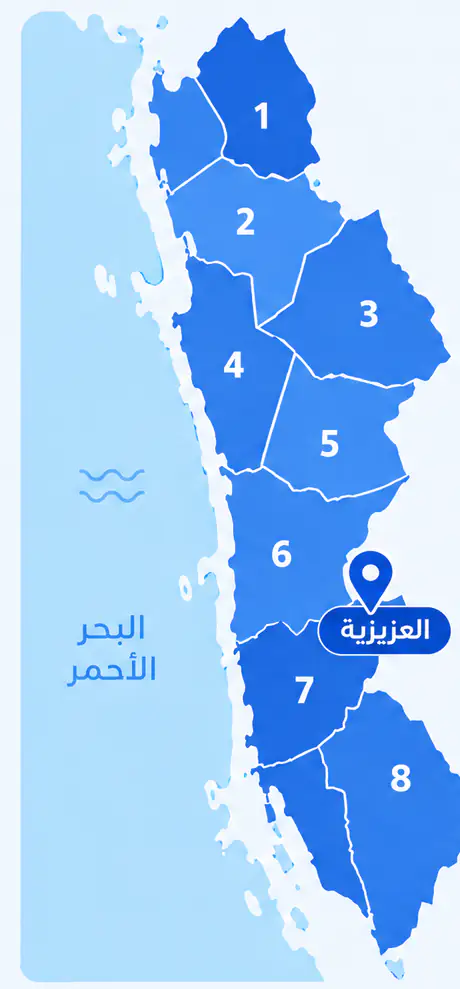
From Al Shiraa and Al Yaqout in the north to Al Thaghr and Al Quraiyat in the south, with our base in Al Aziziyah.
What sets this district apart
Al Hafnah is an eastern industrial zone with warehouses and light factories with high metal roofs, and its eastern location means intense direct morning sun and early heat build-up. Spaced buildings and open areas allow flexible placement of powerful ceiling units or central systems, but concentrated eastern heat requires very high-capacity systems for continuous operation. The eastern area's dryness reduces humidity issues but increases dust accumulation on filters and coils, requiring more frequent maintenance.
Al Hafnah is in east Jeddah, an industrial zone of warehouses and factories directly exposed to strong morning sun.
Warehouses and factories here have very high metal roofs and require very high-capacity central cooling units, from 15 to 25 tonnes or more depending on floor area and intensive use.
The AC setup in Al Hafnah
- 1
Very high-capacity central units for eastern heat load
Warehouses and factories in Al Hafnah need very high-capacity central units to balance the strong, continuous eastern heat throughout the day.
- 2
Supplementary fan ventilation in each zone
We may add supplementary ventilation fans in hot zones directly exposed to sun to ensure even distribution and reduce localized heat.
- 3
Heavy-duty, easy-clean filters for dust control
We install high-spec, quick-access filters suitable for the dusty eastern environment where frequent cleaning is necessary.
Before the visit
Before our visit in Al Hafnah
- 1
Tell us about operating patterns and the hottest areas
Tell us daily operating hours and areas suffering intense daytime heat, and whether there are heat-sensitive goods that need special protection.
- 2
Confirm available space and electrical power
High-capacity units need adequate roof and wall space and very high electrical power; confirm both are available.
- 3
Plan regular maintenance before installation
The dusty eastern environment requires frequent maintenance; let us know how often you can arrange cleaning and filter maintenance.
More districts for Warehouse HVAC
Other services in Al Hafnah
FAQ
Questions about Warehouse HVAC
Is evaporative cooling right for a warehouse in Jeddah?
It depends on indoor humidity levels and the type of stock stored. In well-ventilated open areas where stock is not sensitive to a small rise in humidity, evaporative cooling can work well. The site survey gives a clear answer before any decision is made.
How do you handle the height in tall warehouse bays?
In a tall bay, cool air settles low and hot air rises, which works in your favour when diffusers are aimed correctly at the working level and the racking. We set diffuser angles and positions during design based on the racking height and the movement aisles.
Can cold storage zones link to the rest of the warehouse system?
Cold rooms and freezer rooms run on their own refrigeration systems, which we install as a separate service. What we handle here is the ambient air around those room doors, so warm warehouse air does not rush in when they open, managed by pressure zoning between the two spaces.
Do warehouse air ducts need insulation?
Yes, especially ducts that run close to the hot metal roof. Without insulation, cool air gains heat before it reaches the diffusers and loses much of its effect. We insulate with Armaflex or Kimmco materials and seal joints with Foster sealants to stop air leaks.
Does airflow distribution differ between tall racking aisles and open floor areas?
Yes. In tall racking aisles the airflow path narrows and slows, so we choose directional diffusers that push air along the aisle length rather than spreading it sideways. In open floor areas we use wider-angle diffusers. The angle and position of each diffuser are set at design stage based on the aisle width and racking height.
The strong eastern heat every day, will the cooling system handle this constant pressure?
Yes, we select very high-capacity units designed for continuous operation under severe heat stress, and set up regular maintenance contracts to ensure sustained performance.
There is heavy dust in Al Hafnah, how do you protect units from dust buildup?
We install powerful, easy-to-clean filters and recommend cleaning them monthly or more often depending on dust levels, with regular inspection of coils and internal components.
Does the eastern location affect the unit type choice or installation position?
Yes, the eastern location means intense morning heat, so we select higher-capacity units which may be larger, and may mount them where possible to reduce direct sun exposure.
My factory also runs at night, does the system need different capacity at night versus day?
Daytime carries far more heat load than night, so we select a unit sized for daytime peak, and it will run more efficiently and cheaply at night when the load drops.