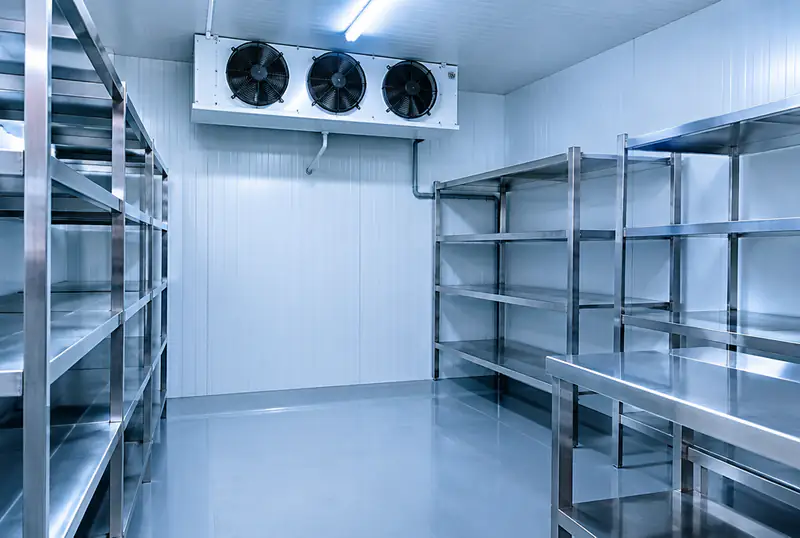
Many restaurant and shop owners in Jeddah need a cold room to store food in quantities beyond what household or small commercial fridges can handle. Deciding to install a cold room is not just a matter of picking a size that fits the available space in the kitchen or storeroom. It involves several technical points that directly affect storage efficiency and electricity consumption over the long term. Reviewing these points before installation, rather than after operation has already started, saves the owner costly adjustments later and reduces day to day operating problems.
Insulation Type and Thickness
Insulation is the element that determines the room's ability to hold the required temperature without constantly straining the cooling unit throughout working hours. Insulation panels vary in thickness and in the material used inside them, and the less heat that leaks from outside into the room, the shorter the time the cooling unit needs to run to make up for that loss and return to the target temperature. Choosing the right insulation thickness depends on the temperature required inside the room, its size, and its position relative to outside heat sources, not on one fixed number that suits every case.
Door Seal and Closure
The cold room door is one of the points most prone to letting warm air in if it does not close tightly, specifically at the rubber gasket around the door frame, which wears down with repeated daily use in a busy restaurant environment. Checking this gasket's condition regularly, and making sure the door closes fully without needing to be pushed hard or closed more than once, keeps the room efficient and reduces outside moisture getting in, which can otherwise freeze on interior surfaces over time.
Cooling Unit Capacity Versus Room Size
A cooling unit that is too small runs constantly without ever reaching the required temperature, while one that is too large cools quickly then cycles on and off intermittently, and both situations affect the unit's lifespan over the long run and the stability of the room's temperature. Calculating the right cooling capacity depends on the room's size, the type of goods stored inside it, and the expected number of times the door opens during working hours, a technical calculation best left to a specialist rather than estimated roughly based on experience with a different space.
Type of Goods Stored and Required Temperature
Required temperature varies by the type of goods stored. A room meant for vegetables and fruit needs a different temperature from one meant for frozen meat or dairy products, and this difference directly affects the type of unit and its required specifications at installation. Some restaurants need more than one room or compartment at different temperatures instead of one room mixing different kinds of goods, since storing items of different sensitivity at a single temperature may not suit every item equally well. Sensitive items such as fresh dairy products also need greater temperature stability compared with items less sensitive to minor fluctuations, which raises the importance of choosing a cooling unit that holds a precise, stable temperature.
Flooring and Drainage
Cold rooms used in restaurants are frequently exposed to moisture and liquids during daily operation, from repeated entry and exit and moving food between the room and the kitchen, so the design needs a slip resistant, easy to clean floor, along with a proper drainage system that prevents water from collecting inside the room. Neglecting this aspect at installation can lead to health issues and persistent moisture that is hard to remove once installation is complete, as well as putting staff safety at risk during repeated entry and exit on a wet or uneven floor. Choosing rust and corrosion resistant materials for the flooring and interior walls also extends the room's life in a humid environment exposed to frequent washing with water and food-safe sanitising products.
Installation Location and Airflow Around the Outdoor Unit
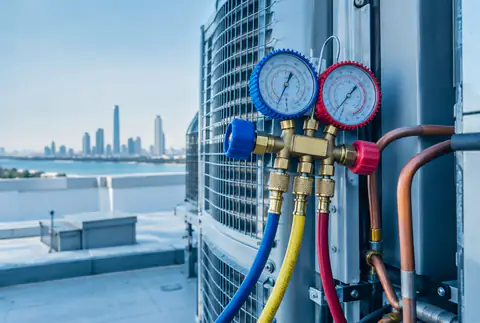
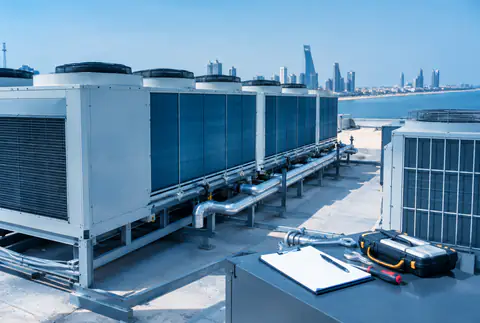
The outdoor unit for a cold room needs enough clearance for air to flow around it, since a cramped space or nearby obstructions reduce heat dissipation efficiency and raise the unit's workload continuously. It is also best to keep the installation spot away from other nearby heat sources such as kitchen equipment or cooking ovens, since surrounding heat increases the effort the unit needs to reach and hold the target indoor temperature all day. It also helps to leave enough space around the unit for routine maintenance without needing to move other equipment out of the way each time a technician needs access. When planning the installation location, it helps to check:
- Enough clearance behind and around the outdoor unit for airflow.
- Distance from direct heat sources in the kitchen.
- Easy access for routine maintenance without dismantling other parts of the space.
Installing a commercial cold room is a long-term decision that deserves a calm review of these technical points before starting work, not after discovering a problem in daily performance or an unexpected, hard to explain rise in electricity consumption. Alrabih Innovative Air Conditioning & Refrigeration Solutions offers cold room installation in Jeddah for restaurants and shops, alongside restaurant and cafe HVAC for the other aspects tied to cooling these spaces. After installation, agreeing on an annual maintenance contract remains a good way to keep the room performing well for years to come.