Many homeowners and shop owners in Jeddah notice that their central air conditioning no longer cools the way it used to, even though the main unit appears to be running normally and shows no obvious fault. In many of these cases, the problem is not the unit itself but the duct network that distributes air between rooms, where part of the cool air escapes somewhere along the path before it reaches its intended room. Knowing the signs of this kind of leak helps catch the problem early, instead of running the unit for longer hours with no real benefit, or assuming the main unit alone is at fault.
A Clear Difference in How Cool Rooms Feel
One of the clearest signs is a noticeable temperature difference between two rooms connected to the same duct network, even though they are both expected to receive a similar amount of air from the same unit. When one room cools quickly while another stays noticeably warmer, the likely explanation is that part of the air meant for the slower room is escaping somewhere along the path before it reaches its outlet, especially if the two rooms are similar in size and sun exposure with no other obvious reason for the gap.
A Higher Electricity Bill With No Clear Reason
When cool air escapes through loose duct joints, the unit has to run longer to make up for the shortfall in cooling inside the rooms, which shows up directly in electricity consumption without any real improvement in the temperature reached. If a homeowner notices a jump in the bill without a real change in how the AC is used or how many hours it runs, it is worth checking the duct network as one possible cause, alongside checking the unit itself and the condition of its filters. Some homeowners notice this jump specifically in summer, when the AC runs for longer hours, which is exactly when the impact of any duct leak shows up more clearly than the rest of the year.
A Hissing or Air Sound at Duct Joints
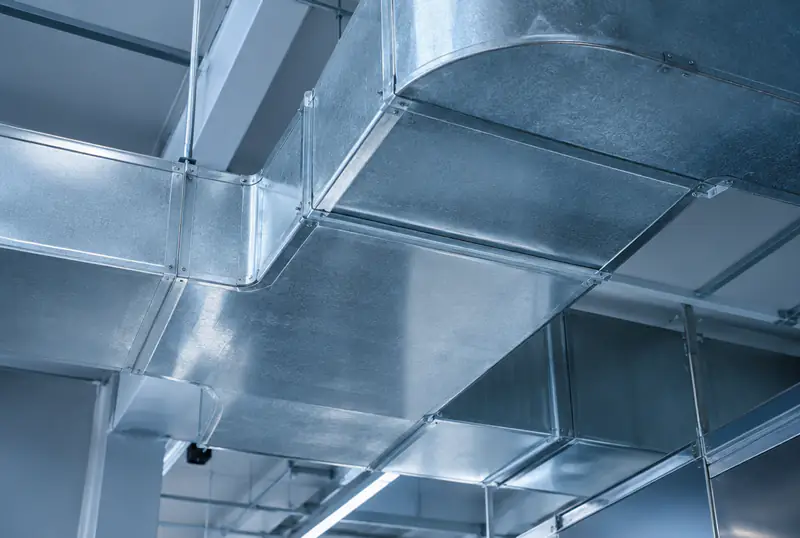
In some cases, a faint air sound or hiss can be heard near visible duct joints or at inspection openings in a false ceiling, caused by air moving under pressure through a small gap in the joint instead of continuing inside the sealed path as designed. This sound can be very faint at first, easy for residents to miss, but it tends to grow more noticeable as the gap widens over time, especially along long runs that pass through several corners before reaching the room.
Dust Building Up Around Inspection Openings
Duct leakage does not only work in one direction. Just as cool air escapes through the gap, unconditioned air can be drawn in from the space surrounding the duct above the false ceiling, and this air often carries dust that gradually collects around inspection openings or at the edges of loose joints. Noticing an unusual buildup of dust in these specific spots, compared with the rest of the ceiling, is a sign worth following up on, and may call for reviewing duct cleaning and sanitising if it spreads and starts affecting air quality in the room. When checking the duct network, it helps to look at:
- Duct joints at branch points and sharp corners.
- The condition of external insulation around main runs.
- Inspection openings and areas close to the false ceiling edges.
Common Places Where Leaks Occur
Some points along a duct run are more prone to leaking than others, chief among them the connection between rigid ductwork and flexible duct, since these joints rely on fastening bands that can loosen over time or under exposure to high heat above the ceiling. Branch points, where more than one path leaves a single junction, also need extra sealing because they carry higher air pressure than a straight run. Sharp corners and the connection between duct and the main distribution box are other spots worth inspecting closely when a leak is suspected. Checking these specific points first, rather than inspecting the entire run from scratch, shortens diagnosis time and guides the technician straight to the area most likely to be the problem.
The Difference Between Duct Leaks and Low Refrigerant
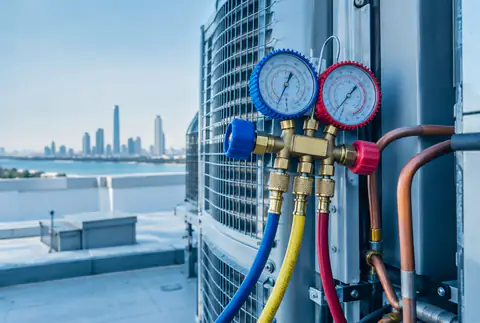
Many homeowners confuse weak cooling caused by a duct leak with weak cooling caused by low refrigerant gas, even though the two causes are completely different and call for different diagnosis. A duct leak affects how air is distributed after it has already been cooled by the unit, while low refrigerant affects the unit's own ability to cool the air in the first place, before it ever reaches the distribution network. Telling the two apart needs a direct technical inspection with the right tools, a subject covered in more detail in when your AC needs a refrigerant recharge.
Fixing a duct leak is usually easier and less costly than replacing parts of the main unit, but it needs a careful inspection to pinpoint the exact leak location before resealing the joints or the surrounding insulation. Alrabih Innovative Air Conditioning & Refrigeration Solutions offers duct installation in Jeddah through its own fabrication workshop built to recognised specifications, which allows it to address problems in existing ductwork or execute a new, tightly sealed network from the start that reduces the chance of these issues later.